

An Alert That Watches for You
How do you wait weeks for one price without opening the chart six times a day?
You hand the waiting over. Alerts on this platform run on the company's own servers, so one fires with your browser closed, your laptop shut and the machine switched off at the wall.
Waiting stops meaning checking the moment something else is doing the watching.
That is most of this lesson. The rest of it is one thing the free plan will not do, and the way around it.
What the free plan will watch
Read this twice, because the book says otherwise and the platform has moved. An alert attached to a drawing counts as a technical alert, and the free plan holds none of those. Right-clicking your line and asking for an alert on it wants a paid plan.
Three price alerts are what you do get. A price alert watches a figure rather than an object, and a figure is all this method ever needed.
So read the price off the line you drew, then set the alert at that number. Hover over the price scale and click the plus, or use Create alert on the upper strip. Your line stays put as the record of the decision.
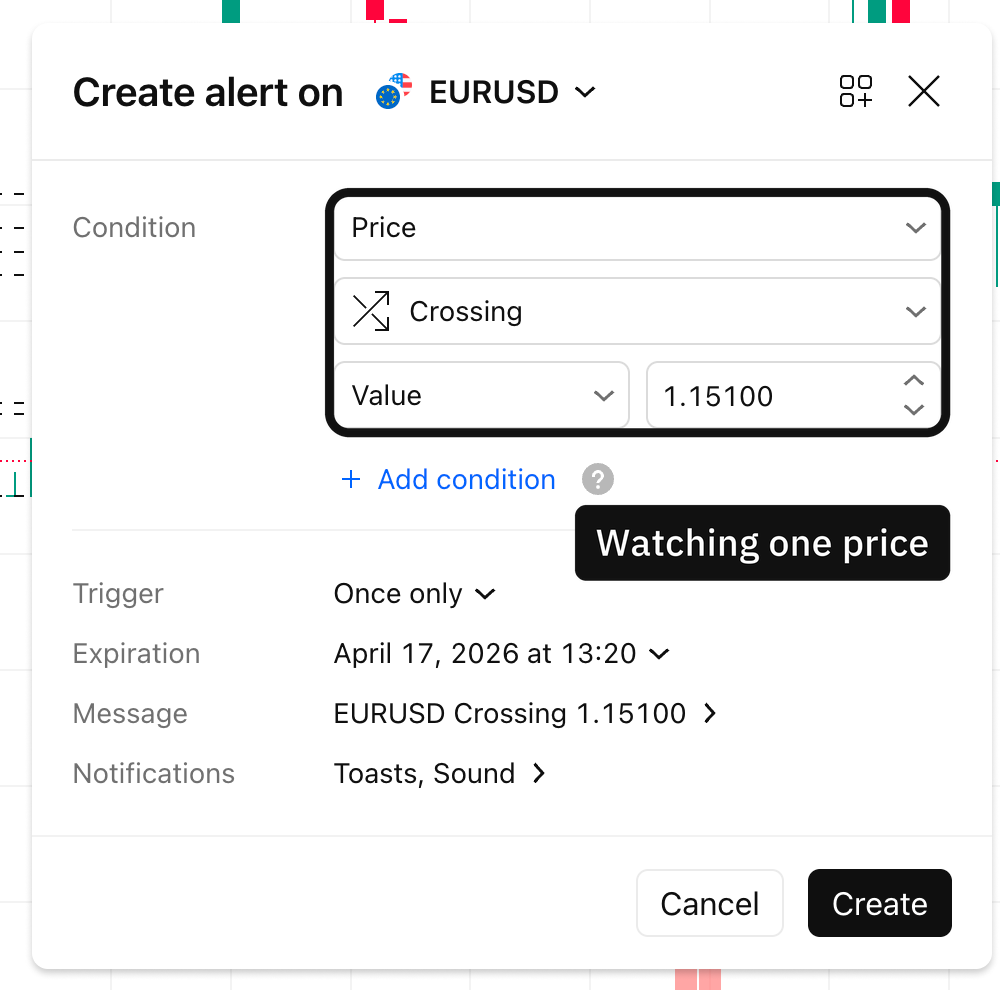
Everything the box asks for sits on one short form, and the ringed part is where the number you read off your own line goes. Charts by TradingView.
A symbol, a condition, a price, and how it should reach you. Email arrives with nothing installed, and the free phone app pushes a notification if you let it.
Three is fewer than it sounds
Three feels like plenty until you count what you actually want watched. One market with one level is one alert. Give that market a level above and a level below and it is two.
Then a second market turns up, and a third, and the allowance is gone before you have finished being curious about anything.
Which is the argument for staying on one market while you learn. One pair, one or two levels, and the allowance is comfortable.
Move both handles to the week you are actually planning and read the count back.
The number climbs faster than anyone expects, because it multiplies. Two markets at two levels is already over the line, and that is a modest week.
One month, and then it stops
A free alert lasts a month. The method here waits for weeks, so that limit lands squarely on the thing you are trying to do, and the answer is a habit rather than a worry.
Re-read the chart on the same evening every month, and re-set the alert while you are there
Check the level is still the last clear low, because a new one may have formed
Delete anything you would no longer act on, which usually frees the alert you wanted
An alert is an invitation
One fires at three in the morning. It tells you a price arrived and nothing else, and the reason you wrote down when you drew the line is a separate question with a separate answer.
The candle that reached the level has closed
The reason for the line still reads true in daylight
The stop still sits where the band says it should
Set one alert on the level you drew, then close the tab and leave it alone.
The watching now happens somewhere else, which is the only reason this method fits around a job.
Where these facts come from
That alerts run on the company's servers, that the free allowance is three price alerts, that alerts on drawings need a paid plan and that a free alert lasts a month were all read off the platform's own pricing page and help centre on the day this was written. Any of them can change. The habit of re-reading before acting is the book's and not the platform's.